|
HELLEBORUS orientalis Oriental Hellebore, Lenten Rose
Type:
PerennialHeight: 18" (45cm) Flowering Time: Winter/Spring Flower Colour: Green, white, pink, purple
Classification:
Class:
Angiospermae (Angiosperms)Subclass: Dicotyledonae (Dicotyledons) Superorder: Magnoliidae (Magnolia Superorder) Order: Ranunculares (Buttercup Order) Family: Ranunculaceae (Buttercup Family) Genus: Helleborus (Hellebore) Species: orientalis (oriental)
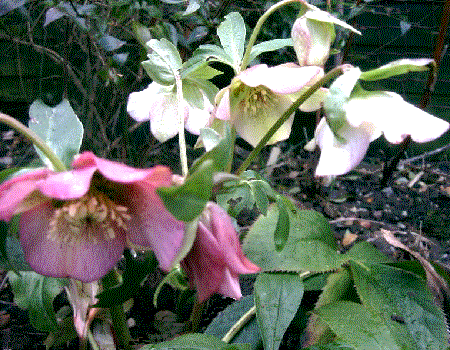
Helleborus orientalis hybrids are clump forming perennial plants, flowering in late winter or very early in spring. They have large, coarse, deeply lobed and toothed leaves, which are semi-evergreen. The flower stems emerge before the new leaves, bearing saucer-shaped flowers which are really five large sepals with inconspicuous petals and many stamens, rather like a large buttercup. Colours are usually greenish pinks and purples, rarely clean white, often with maroon spots. After flowering, the sepals fade to duller colours, and the new leaves emerge, reaching a height of 12-18".
Helleborus orientalis prefers shaded conditions, preferably in soil which does not dry out, so is an ideal plant for a woodland garden or a north-facing border.
It often self-seeds, although seedlings are usually of variable colours, and it is easily grown from seed, although germination may take several months.
THIS PLANT IS POISONOUS
Harvesting and Growing from Seed:
 |
 |
 |
 |
Germination:
Summer |
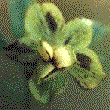
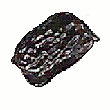
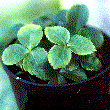
Seed Pod The seedpod is like five short fat pea pods joined together, opening down one side, although the number of parts varies from 3 to 8 in hybrids. Seed The seeds are rounded black ovals, with a brown ridge on one side. There are several seeds Seedling The seedling has tough leaves divided into three lobed leaflets. Helleborus seeds may germinate quicker if sown as soon as they are ripe. |
(You can check the meaning of any technical terms new to you in the Botany section of the site)
| Back to Plant Profiles Main Page |
|---|